All About Hittites and the Hittite Empire
Hittites were a great empire that has lived in Asia-minor. In this post, we will go deep into the Hittites and their life in the history scene. Below are the topics that you will read in this post!
The Hittites, a remarkable civilization that thrived in Anatolia and Syria from around 1600 BCE, disappeared from historical memory for nearly a thousand years. Despite their political and cultural dominance, military campaigns against Egypt, and development of their own writing system, laws, and religion, the Hittites left little trace—until their rediscovery in the 20th century.
The story of their modern rediscovery begins with the French explorer Charles Felix Marie Texier (1802–1871). In 1834, Texier traveled to Anatolia in search of a city named Tavium, mentioned in historical texts. He wrote:
“My goal was to locate the old city of Cavium. All clues pointed to a fertile area along the shores of the old Halys (Kızılırmak). On July 28, 1834, we began moving north.”
During his journey, Texier arrived at Boğazköy, where he encountered mysterious ruins and unusual hieroglyphs. While exploring, he discovered a large building, two monumental gates, and a wall stretching about one kilometer. He recorded:
“No structure here could belong to Roman times. This city is as large as Athens in its prime.”
With the help of a local villager, Texier also explored Yazılıkaya, an ancient religious site. He recognized that it was a holy place, though he could not yet identify the civilization responsible. In 1839, he published his observations in “On Asia Minor”, noting:
“The ruins of Boğazköy prove the existence of a nation with a great culture.”
Subsequent studies revealed connections between tablets from Hama (Syria), Kargamış (Gaziantep), reliefs at Ivriz (Tarsus), and hieroglyphs at Yazılıkaya, suggesting a widespread nation with a unified writing system and culture. But who were they?
The Torah contains the earliest textual references, mentioning the Hittites alongside the Egyptians as major powers (2 Kings 7:6), confirming their prominence in the ancient Near East.
The British scholar Archibald Henry Sayce later examined Anatolian ruins and confirmed that these findings belonged to the Hittite nation, publishing his work “The Great Empire of the Hittites” in 1884. Although initially overlooked, his research firmly placed the Hittites in Anatolian history.
Additional evidence came from Egypt. Temple walls depicted the wars between Pharaoh Ramses II and the Hittites, including detailed inscriptions of campaigns and a remarkable peace treaty, which even led to a Hittite princess marrying the Pharaoh. Assyrian records also frequently mention the land of Hatti, providing further evidence of the Hittites’ influence.
A pivotal discovery occurred in 1887 at Tell El Amarna, south of Cairo, where local villagers inadvertently unearthed clay tablets that became part of Egypt’s largest ancient archive—the Amarna Tablets. Written in Akkadian cuneiform, these diplomatic letters included correspondence between Pharaoh Akhenaten and Hittite King Šuppiluliuma (14th century BCE), confirming the Hittites’ political and international significance.
Further studies established that the Hittites were indeed an Anatolian people. Letters, such as the Arzava Letters, were written in a cuneiform language consistent with tablets found later at Boğazköy.
German engineer Carl Humann and archaeologist Hugo Winckler meticulously mapped the Boğazköy ruins and copied reliefs, revealing the site’s importance. Between 1906 and 1908, Winckler excavated Boğazköy and realized he had uncovered the ancient capital of the Hatti Empire. The city, likely named after the country itself, contained tens of thousands of tablets, including one describing the famous Kadesh Treaty between Ramses II and Hattusili, the Hittite king.
Through these groundbreaking discoveries, the Hittites were restored to history—not as a forgotten civilization, but as a major Anatolian empire whose political, cultural, and diplomatic influence shaped the ancient Near East.
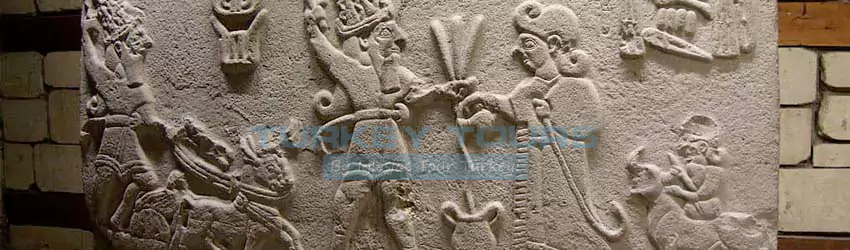
The Hittites: Pioneers of Ancient Anatolia and the Kadesh Treaty
The Hittites were one of the most remarkable civilizations of the ancient world. Emerging from Indo-European tribes around 3000 BCE, they gradually settled in Anatolia, blending with the indigenous Hattians to form a powerful empire. Their capital, Hattusa, near modern Boğazkale, Turkey, became the center of an empire that spanned Anatolia, northern Syria, and Upper Mesopotamia at its peak around 1300 BCE.
The Kadesh Treaty: The World’s First Peace Agreement
One of the most significant discoveries in Hittite history was the Kadesh Treaty with Egypt, the earliest known written peace treaty between two major powers.
In 1907, German archaeologist Hugo Winckler uncovered a well-preserved tablet while excavating Boğazköy (Hattusa). The tablet contained the treaty text between Ramses II of Egypt and Hattusili of Hatti, confirming the historical accounts found on the Karnak Temple walls.
Winckler described his discovery:
“On August 20, 1907, after twenty days of careful excavation, we reached the first partition wall and found a tablet in excellent condition. I was stunned; everything I had previously known seemed insignificant in comparison. Here, I held proof of an extraordinary agreement—written in cuneiform, in the Babylonian language, sent mutually by the two empires.”
The Kadesh Treaty demonstrates the Hittites’ advanced diplomacy, emphasizing mutual respect, political negotiation, and international law—concepts far ahead of their time.
Hatti: The Oldest Civilization of Anatolia
Before the Hittites arrived, the region was inhabited by the Hattians, an indigenous people who lived in Anatolia from 3000 BCE.
Language: The Hattians spoke a unique language, unrelated to Semitic or Indo-European tongues.
Culture: Their religious practices and customs influenced the incoming Hittites. Hittite priests often recited prayers in the Hattian language, marking a cultural fusion.
Population: Even after the Hittite migration, Hattians formed the majority in central Anatolia.
Significant Hattian settlements include Çatalhöyük, Çayönü, and Hacılar, some of the most advanced cities of the 4th–3rd millennium BCE.
Who Were the Hittites?
The Hittites were Indo-European settlers who gradually assimilated with the Hattians. They introduced their language, Nesice-Neshi, and built a centralized state while adopting many local traditions. Key aspects of Hittite society include:
Political System: The Hittite state was a monarchy with a council of nobles called Panku, which advised the king, controlled treaties, and limited royal authority.
Military: Their army included infantry and chariot warriors. Cavalry was absent, and fleeing the battlefield was a capital offense.
Religion: Highly polytheistic and tolerant, they incorporated the gods of conquered cities into their pantheon, calling Hattusa “The City of a Thousand Gods”.
Key Hittite Achievements
Law and Governance
Hittite law emphasized humanity and compensation rather than harsh punishment.
They implemented progressive legal codes more advanced than Babylon’s Hammurabi laws, some principles of which are still studied at the University of Pittsburgh Law School today.
Economy
Shekels served as both a unit of weight and currency, typically in silver, without stamps.
Art and Culture
Hittites excelled in metalwork, producing gold and silver items, plates, drinking cups, and figurines.
Tombs, such as those in Alacahöyük, reveal elaborate burial practices with animal sacrifices and intricate decorations.
Military Strategy and Expansion
Hittite kings, such as Hattusili I and Mursili I, expanded the empire into Southeast Anatolia, Syria, and Mesopotamia.
They respected conquered peoples, often incorporating their gods and customs, strengthening political stability.
Hittite Religion
The Hittites practiced religious tolerance and revered a pantheon of gods, including:
Kumarbi: Father of the gods
Tesup: Storm god
Hepat: Fertility and sun goddess
Sharruma: Son of Tesup and Hepat, god of lightning
Telipinu: God of nature
Shilunkatte: God of war, plague, and disease
Sin & Shamash: Moon and sun deities
Ishtar: Goddess of love and war
Their rituals sometimes included human sacrifice, usually performed after military victories to boost morale and demonstrate power.
Hittites in the Bible
The Hittites are mentioned multiple times in the Hebrew Bible:
Abraham purchases a burial site from Ephron the Hittite (Genesis 23).
Esau marries Hittite women (Genesis 26:34).
King David orders the death of Uriah the Hittite (2 Samuel 11).
King Solomon has Hittites among his wives (1 Kings 10:29–11:2).
These references confirm the Hittites’ prominence in the ancient Near East.
Summary: Hittite Civilization at a Glance
Origin: Indo-European tribes migrating into Anatolia (~3000 BCE)
Language: Nesice-Neshi, influenced by Hattian
Capital: Hattusa (near Boğazkale, Turkey)
Golden Age: Mid-1300s BCE
Territory: Anatolia, northern Levant, Upper Mesopotamia
Key Kings: Hattusili I, Mursili I, Hantili I, Zidanta I, Ammuna, Huzziya I, Telipinus
Notable Achievements: First written peace treaty (Kadesh), advanced legal system, Panku Assembly, polytheistic religious tolerance, monumental art, and sophisticated military
The Hittites were pioneers of law, diplomacy, and governance in the ancient world, leaving a legacy that resonates in modern law, archaeology, and biblical studies.
Final
Modern Turkey is full of history and culture. It is possible to see and explore some traces from different civilizations in every square meter. If you are one of those, who would like to feel and explore this lovely country; here you may start searching for your Turkey Travel Package (Small-Group Tours and Private Turkey Tours)!
Before planning your Turkey Tours, we highly recommend you reading our posts which are created about the most popular destinations of Turkey; Istanbul, Cappadocia, Ephesus, Pamukkale, Aphrodisias, Pergamum, and many others!
[2025 Update] Interest in Hittite civilization continues to grow among history travelers in 2025, especially following major archaeological discoveries at Hittite sites across central Anatolia. The Çorum Archaeological Museum — home to one of the world’s finest Hittite artifact collections — has expanded its galleries and remains a must-visit for anyone exploring this ancient civilization. Hattusha (Boğazköy), the Hittite capital and a UNESCO World Heritage Site, continues to be the crown jewel of Hittite tourism. For those building an Anatolia-focused itinerary, combining Hattusha with Alacahöyük and the Yazılıkaya rock sanctuary offers an exceptionally rewarding deep dive into one of history’s most powerful and sophisticated empires.
Explore more ancient civilizations in Turkey: Discover Göbeklitepe, humanity’s oldest temple pre-dating the Hittites by thousands of years, or read our guide to 10 Must-See Archaeological Sites in Turkey. For a deeper cultural journey, explore our Turkey Cultural Tours covering 20 iconic destinations, or plan your trip with our 7-Day Turkey Itinerary.
CATEGORIES