ISTANBUL
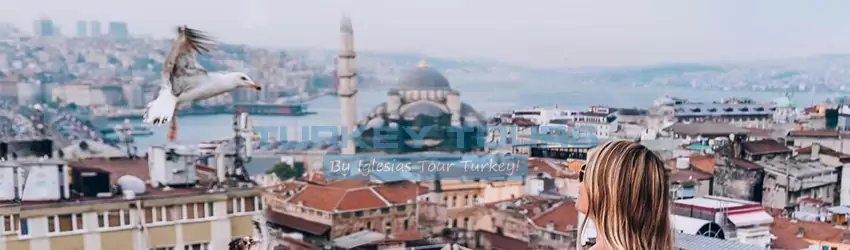
Istanbul is located in northwestern Turkey, and the approximate population is around 15 – 20 million. It is the sixth most populous metropolitan city in the world. It is located in the Marmara Region, one of Turkey’s seven regions.
The Marmara Sea is an inland sea that connects the Black Sea to the Aegean and the Mediterranean Sea. Since there are many marble quarries in the surrounding islands, the name Marmaros, which means marble in Greek, was used. Today, “Marmaros” is used in Turkish as Marmara and gave its name to this inner sea. Istanbul is a city that separates the Asian and European continents and has land parts at both points and hosted important empires.
It has attracted a lot of attention from the past to the present with its strategic location. Istanbul is a historical peninsula with a coast to the Marmara Sea, Istanbul Strait, and Golden Horn. In addition, it is a city that separates the Asian and European continents and has land parts at both points, and hosted important empires.
During your travels, it is possible to see extraordinary religious and civil structures belonging to the Roman, Byzantine, and Ottoman periods. Istanbul, which has a history of 2700 years, was first seen as a settlement by Greek colonies from Megara (685 BC). Later, in 667 BC, the Dorians from Greece established a new city on behalf of their king, Bizas, on the place where today’s Dolmabahçe palace is located and the city was named Byzantium.
Undoubtedly, one of the brightest periods of Istanbul is the time of the Roman emperor Constantine I. He moved the Roman capital here and named the city “New Rome“, but the city became famous as Constantinople. After the division of the Roman Empire in AD 395, this became the capital of the Eastern Roman. Following the Latin invasions in 1204, Constantinople came under the rule of the Latin Empire for 57 years. The city, which was taken back later, continued to be the capital of Byzantium until the conquest of Istanbul by Mehmet the Conqueror in 1453.
The city, which is difficult to besiege with its gigantic and robust walls, was protected by 3 rows of walls and ditches. Only Fatih Sultan Mehmet crossed these walls and rewrote the history of Istanbul. It was accepted into the UNESCO World Heritage List in 1985 with its historical sites. Historical areas consist of 4 main regions. These are; Zeyrek mosque and its surroundings, Sultanahmet mosque and its surroundings, Istanbul walls, and Süleymaniye mosque and its surroundings.

HIGHLIGHTS IN SULTANAHMET SQUARE
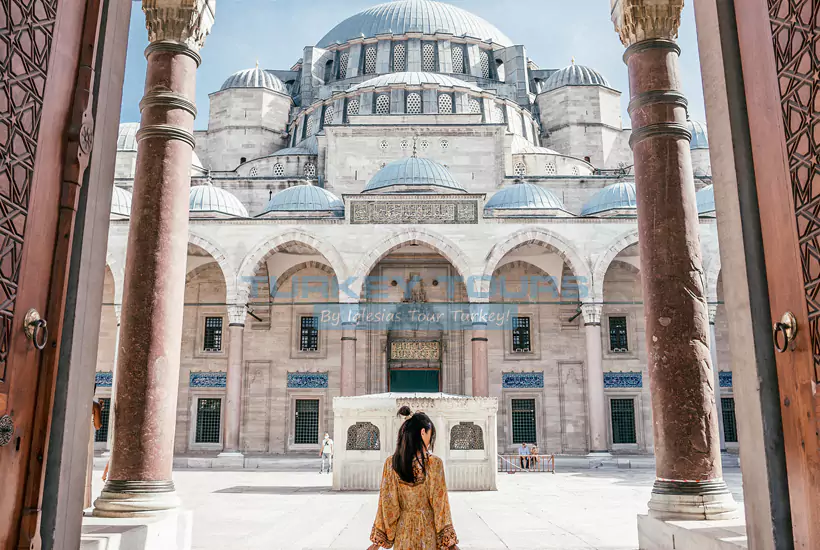
Sultanahmet Square, located at the tip of Istanbul’s Historical Peninsula, represents the historical heart of the city. Although it sits in the eastern part of Istanbul geographically, it has always been the political and cultural center, hosting imperial palaces, mosques, and sacred institutions throughout history.
A key marker of the square’s significance is the Million Stone, located opposite Hagia Sophia. This stone marked the “zero point” of Constantinople, from which the city’s main streets stretched to the gates and connected the capital of the Eastern Roman Empire to the wider world.
After the Ottoman conquest, the area retained its spiritual and civic importance. Sultans built majestic mosques, palaces, and public spaces, making Sultanahmet Square one of the most vibrant centers of daily life.
The Hippodrome of Constantinople
The first Hippodrome was built in the 2nd century AD, and about a century later, the city’s treasury and administrative offices were relocated here. To ensure the grandeur of “New Rome,” Constantine the Great expanded the Hippodrome to its final form, modeling it after Rome’s Circus Maximus.
The Hippodrome of Constantine could hold up to 100,000 spectators, measuring 480 meters long, 117 meters wide, and shaped like a horseshoe—roughly the size of six football fields.
In the middle of the Hippodrome stood the spina wall, adorned with monuments brought from across the empire, symbolizing its power. With the rise of Christianity, violent spectacles were replaced by horse races, held up to 60 days a year. Contestants circled the spina seven times, and the winner would salute the emperor at the imperial box.
Many bronze sculptures from Greece, Egypt, and Rome decorated the Hippodrome, but during the 57-year Latin occupation, most were stolen, melted down, or repurposed. Among these, the famous four-horse bronze sculpture by Lysippos now stands in St. Mark’s Square, Venice.
The Hippodrome also served as a center where the emperor and citizens came together. The Nika Riot of 532 AD was one of the bloodiest uprisings in Constantinople’s history. After a horse race, around 10,000 spectators remained, rebelling against Emperor Justinian. The riot escalated, spreading into the streets as citizens attempted to crown a new emperor. Justinian’s forces quelled the rebellion, leaving 30,000–40,000 people dead, reportedly with the Hippodrome floor stained with blood.
Monuments of Sultanahmet Square
Egyptian Obelisk: Dating back to 1550 BC, during Pharaoh Thutmose III’s reign, this is the oldest monument in the square. It was brought to Constantinople during the Roman period and features reliefs of the emperor observing chariot races, along with hieroglyphs depicting the pharaoh crossing the Euphrates in war.
Serpentine Column: Originally from the Temple of Apollo in Delphi, this monument features three intertwined snakes and is a remarkable example of classical art.
Obelisk of Constantine: A 32-meter masonry column at the southern end of the Hippodrome, built during Emperor Constantine’s reign.
German Fountain: Located at the northern end, this ornate fountain was built in 1898 by German Emperor Wilhelm II to celebrate Turkish-German friendship and gifted to Ottoman Sultan Abdulmecid II.
Basilica Cistern: Constructed by Emperor Justinian in the 6th century, this vast underground reservoir covers 9,800 square meters and holds up to 80,000 tons of water. Known as the “Basilica Palace” due to its forest of columns, it ensured water supply for the city and palace gardens, even during sieges.
Sultanahmet Square is a living historical museum, where Byzantine splendor meets Ottoman magnificence, offering visitors a window into Istanbul’s layered history.
FINAL THOUGHTS
Istanbul is one of the richest cities in Turkey and it has several places to explore, especially in Sultanahmet Square! Exploring those on your own is easy since the monuments are all within walking distance. However, you definitely need a tour guide to get enough knowledge and true information as well as to avoid any possible hassle of such Metropol City! To see our Tours in Istanbul, read our post!
If you wish to check-out our fully guided Private Tours in Sultanahmet Square, do not hesitate to contact our team! If you liked our posts, do not forget to share them with your friends!
CATEGORIES